Searching for “jamal musiala net worth salary 2026”? Here’s the headline version: Bayern Munich’s No. 10 is now the club’s highest-paid player, on a deal worth roughly €35.3 million a year in salary plus bonuses for the 2026/27 season. His net worth is estimated somewhere between €15-20 million — though no official figure exists, so treat every number you read with caution. And honestly? The numbers are only half the story. Behind them sits a year that included a broken leg, a World Cup, another surgery, and one of the most quietly brave health disclosures football has seen in years.
The €25M-a-year deal
February 14, 2025. Musiala signs a new Bayern contract running to June 30, 2030 — and the figures are staggering.
The base salary lands at roughly €25 million per season, putting him among Bayern’s top earners alongside Harry Kane. For context, his previous deal from 2021 paid around €5 million a year. Five times more. If you watched him last season, none of this will surprise you.
Sky Germany breaks it down as €25 million base plus €6 million in bonuses — €31 million in total. But the numbers have climbed since. Capology figures via Bavarian Football Works (August 2026) put his 2026/27 package at €22.83 million base plus €12.45 million in bonuses: €35.28 million total, making him Bayern’s highest-paid player outright — ahead of Kane (€31.25M) and Kimmich (€25M).
Other outlets slice it differently. SalarySport lists £414,000 a week — £21.528 million a year — on a deal to June 2030. The National (13 August 2026) puts him at $550,000 a week, joint-tenth among the world’s highest-paid footballers for 2026/27.
One more detail from Bild: a two-tier release clause. €175 million until January 2029, dropping to €100 million in the summer windows of 2029 and 2030.
The night in Atlanta
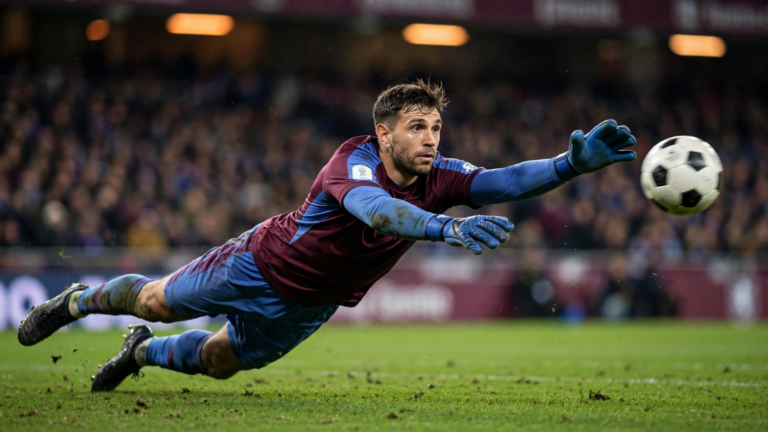
July 5, 2025. FIFA Club World Cup quarter-final, Bayern vs PSG, Atlanta. Musiala collides with PSG goalkeeper Gianluigi Donnarumma.
The diagnosis is brutal: fractured left fibula, plus a broken and dislocated ankle. He’s stretchered off at half-time. Successful surgery in Munich follows on July 7, and Bayern say he’ll be out “for the next few months.”
Before the injury, he’d been electric: 21 goals and 8 assists in all competitions in 2024-25 — a season that ended with Bayern winning the Bundesliga.
196 days later
October 24, 2025: first grass running. The long road back is on.
Then, January 18, 2026. Bayern vs RB Leipzig. In the 87th minute, Musiala comes on as a substitute for Serge Gnabry — 196 days after the injury. He marks the moment by setting up Michael Olise’s goal in a 5-1 win. Manuel Neuer says the whole squad is delighted to have him back. Aleksandar Pavlovic calls him a world-class player. Sometimes the simple words are the truest ones.
It isn’t all smooth, though. March 2026 brings further ankle trouble — adhesions and tendon pain. He misses the March international break, returning in April. Bayern’s Max Eberl puts it plainly: this isn’t an injury that can be rehabilitated casually.
World Cup summer, then surgery
Summer 2026 brings the FIFA World Cup — and Musiala is in Germany’s squad. He features at the tournament and scores in the 7-1 opening win over Curacao on June 14, 2026, in Houston.
Then comes June 29, Foxborough. Round of 32. Germany 1-1 Paraguay after extra time. Paraguay win 4-3 on penalties — Germany’s first-ever World Cup shootout defeat, ending a 44-year perfect record. A historic low, whatever else you say about it.
July 2026 brings a planned, routine ankle operation after the World Cup — removal of the metal plate from the first surgery, standard medical protocol.
The August announcement nobody expected
August 15, 2026: Musiala collapses in a pre-season friendly against RB Leipzig. Three days later, it happens again — minutes after coming on in a friendly at Heidenheim, he’s helped off the pitch.
Then, on August 18, his own Instagram statement: he’s been diagnosed with “temporary, brief, but easily treatable absence seizures” caused by “a neurological dysfunction.” His message is calm and disarmingly honest — the episodes may look frightening at first glance, but for him they’re simply part of everyday life; there’s no additional health risk; he’s very optimistic; and neurological specialists have cleared him to keep playing football.
On August 21, coach Vincent Kompany reveals Bayern had known about the condition “a long time” — the August episodes followed a change in Musiala’s treatment. He misses the August 22 Supercup against Dortmund. Sporting director Max Eberl adds the club has known for over a year — and going public was Musiala’s own decision.
No speculation, no sensationalism. Just his words and the club’s. That’s all anyone’s owed here.
The boy who chose Germany
Jamal Musiala was born February 26, 2003, in Stuttgart. He’s 23: an attacking midfielder, Bayern’s No. 10, a Germany international.
His story crosses borders. Father Daniel Richard — “Rich” — is British-Nigerian of Yoruba roots; he played football in Nigeria before moving to Germany and holds British nationality. His mother Carolin is German with Polish roots and works as a sociologist.
At age seven, the family moves to England, where he lives for around eight years. Youth football at Southampton, then the Chelsea academy from 2011 to 2019 — with Whitgift School in Croydon along the way. He leaves Chelsea in July 2019 and joins Bayern Munich at 16.
The rise is dizzyingly fast. Bayern first-team debut: June 2020 against Freiburg, aged 17 years and 115 days — the club’s youngest Bundesliga player at the time. Three months later, against Schalke, he becomes the club’s youngest Bundesliga goalscorer (17 years, 205 days).
In February 2021, aged 17, he chooses Germany over England at senior level. His words to The Athletic: “I have a heart for Germany and a heart for England. Both hearts will keep on beating.” As of February 2025: 38 caps and 7 goals for Germany, nearly 200 Bayern appearances.
So what is he actually worth?
Here’s the honest answer: an estimated €15-20 million — roughly $16-22 million — per August 2026 estimates. Other outlets publish different figures. No official number exists.
So present it as a range, never a single definitive figure. Anyone giving you one exact number is guessing.
What next
As of early October 2026, the new season shows a player being eased back with care: 3 Bundesliga appearances, 1 goal, 1 assist, 148 minutes. His new pay bracket puts him in the same conversation as the game’s other young superstars — see how Jude Bellingham’s Real Madrid earnings and Lamine Yamal’s Barcelona salary compare.
The Ballon d’Or 2026 shortlist? He’s not on the 30-man list. The winner is crowned in London on October 26, 2026. Musiala, in a September 2026 Sport Bild interview, seems at peace with that: “I don’t want to talk about individual awards right now; those things happen naturally if they happen at all. The team always comes first.”
After the year he’s had, that’s not a platitude. It’s a philosophy.