The war against Iran entered a dangerous new phase on Thursday as Washington’s “economic D-Day” sanctions deadline took effect, Iranian flights to the Gulf were cancelled, and Saudi Arabia shot down six Houthi ballistic missiles in a single day.
The Deadline That Grounded Iran’s Planes
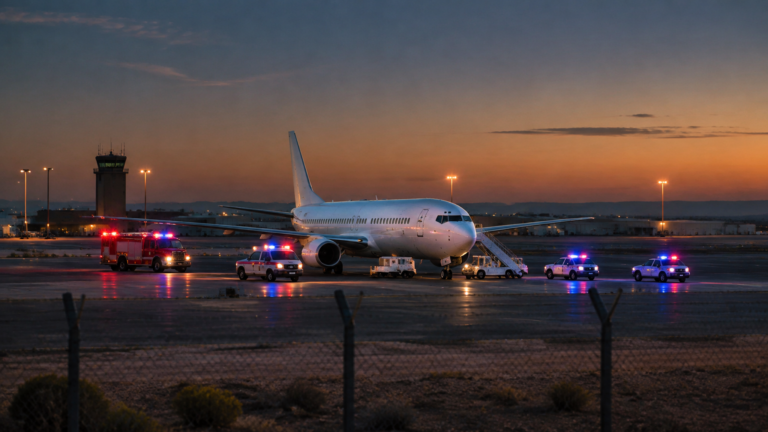
The US Treasury had set September 23 as the deadline for companies around the world to stop doing business with Iranian airlines. Washington’s goal, officials say, is to ground Iran’s entire global civilian fleet through so-called secondary sanctions — penalties on third-country firms that keep trading with Iranian companies.
President Donald Trump has branded the new strategy “economic D-Day”, comparing it to the Allied assault on Nazi-controlled France during World War Two. It marks a sharp shift in tactics after the US-Israeli war against Iran, which began in February, stalled for months on the battlefield. (Source: Reuters)
The impact was visible almost immediately. On Thursday, Iranian flights to Gulf neighbours — including Dubai, the region’s biggest travel hub — appeared to have been cancelled. Iran’s ISNA news agency reported that all flights to the United Arab Emirates had been halted as of midnight, and no arrivals or departures to Iran were visible on the websites of Dubai or Abu Dhabi airports. The websites of at least two Iranian carriers, Qeshm and Varesh, showed their UAE flights as cancelled. (Reuters)
The UAE’s General Civil Aviation Authority then announced a formal suspension of flights operated by Iranian airlines to and from the UAE, effective September 24 until further notice. (Siasat)
Tehran Threatens to Make Airports “Unusable”
Iran did not take the move quietly. On Wednesday, Tehran warned that any neighbouring country complying with the US flight ban would face retaliation — specifically, that their airports could be made “unusable”.
Mohsen Rezaei, the head of Iran’s Supreme National Security Council, delivered the threat in an interview with Iranian state television. “If a country cooperates with or embarks on adventures with the United States, its airports will no longer be able to operate flights” to Iran, he said. (Siasat)
The pressure is already spreading beyond the Gulf. Iran’s ISNA reported that a flight bound for Tajikistan was forced to turn back after Turkmenistan closed its airspace to Iranian carriers. US Treasury Secretary Scott Bessent said on Wednesday that 80 to 90 percent of Iran’s external flights had already been shut down — and warned Washington would keep targeting companies and financial institutions supporting Iranian airlines. (Reuters, Siasat)
Not every door has closed. Tehran’s Imam Khomeini International Airport still listed Thursday flights to and from Afghanistan, Armenia, China, Iraq, Pakistan, Tajikistan and Turkey — but nothing to the nearby Gulf states. (Reuters)
Six Missiles Down: The Saudi–Houthi Front Heats Up
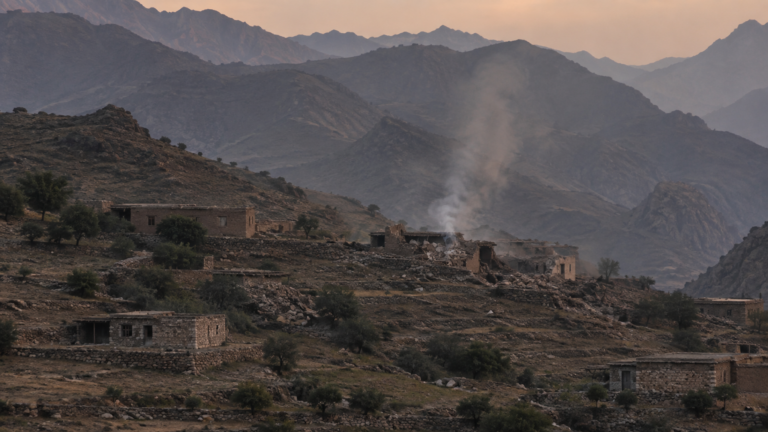
While the economic war tightened around Iran’s airlines, the shooting war flared on a second front. Saudi Arabia said on Thursday that it had intercepted six ballistic missiles fired by Yemen’s Iran-aligned Houthi fighters, thwarting attacks on the southern province of Taif and the Yanbu area on the Red Sea. (Reuters)
The Saudi-led coalition fighting the Houthis in Yemen warned that “any escalation and violations by the terrorist Houthi militia will be dealt with firmly”. Saudi authorities also issued civil defence alerts earlier in the day for Mecca, Jeddah, Yanbu and Tabuk, flagging potential danger to residents. (Economic Times)
The Saudi–Houthi confrontation has quietly become the main front in the wider Middle East war. The Houthis declared a blockade on Saudi Arabia in July and have seized Yemen’s entire Red Sea coast this month, pushing into highlands near the city of Taiz. According to the United Nations, more than 700 people have been killed and thousands wounded in the latest round of fighting, nearly 130,000 Yemenis have been displaced, and more than 3,000 have fled by boat across the Red Sea to Africa. (Reuters)
Oil Prices Jump as Talks Stall
Markets felt the shock. Brent crude rose about 2 percent to $105.12 a barrel on Thursday and US West Texas Intermediate climbed 2.2 percent to $94.15, after the Houthi missile attack revived fears of supply disruptions. Both benchmarks had been up nearly 5 percent earlier in the day. (Reuters)
At the same time, diplomacy has not died. Negotiators from the US and Iran are reportedly exploring a phased path out of the war: Tehran would reopen the Strait of Hormuz while Washington lifts its economic blockade of Iran. The strait has become the central bargaining chip in the nearly seven-month conflict. But talks face a steep obstacle — neither side wants to move first. (Khaleej Times)
On Thursday evening, 80 countries at the United Nations called for the full restoration of maritime navigation in the Gulf — a sign of how worried the world has become about the disruption of global shipping. (Khaleej Times)
What Happens Next
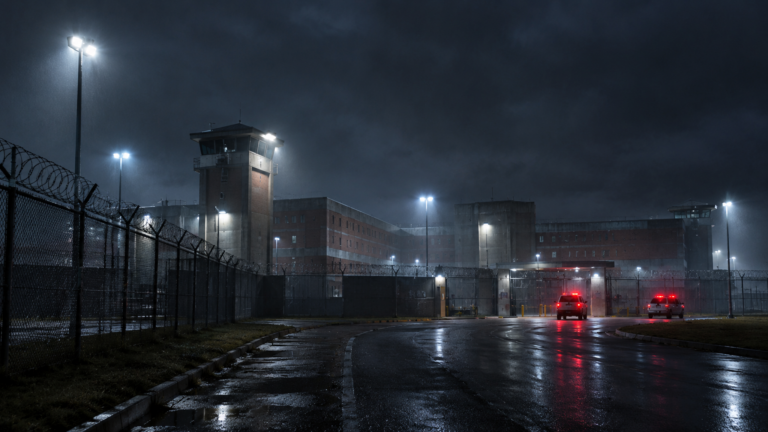
The “economic D-Day” strategy is uncharted territory. The United States has never before tried to ground an entire country’s civilian airline fleet through secondary sanctions. If the flight ban holds, it could deepen Iran’s isolation and worsen an economic crisis in a country already facing a US blockade of its ports at sea — a prospect one retired teacher in Tehran summed up in a message to Reuters: “We are living in an open-air prison”. (Reuters)
The immediate questions are whether Iran will follow through on its threat to target neighbouring airports, whether the Houthis will escalate their missile campaign against Saudi Arabia, and whether back-channel diplomacy can turn talk of a phased deal into something real. For now, the Gulf is holding its breath.
Conclusion
In a single day, the Iran conflict shifted from a stalled battlefield war into something broader and potentially more volatile: an economic strangulation of Iran’s aviation sector, an explicit Iranian threat against neighbouring airports, and a rain of ballistic missiles over Saudi Arabia. This is not a return to the status quo — it is an escalation. And escalations, as this year has already shown, have a habit of producing consequences nobody planned for.
Read more on the sanctions squeeze: China’s workaround trade with Iran | How the war is straining global energy markets | Iran loomed large at the Trump–Xi White House summit